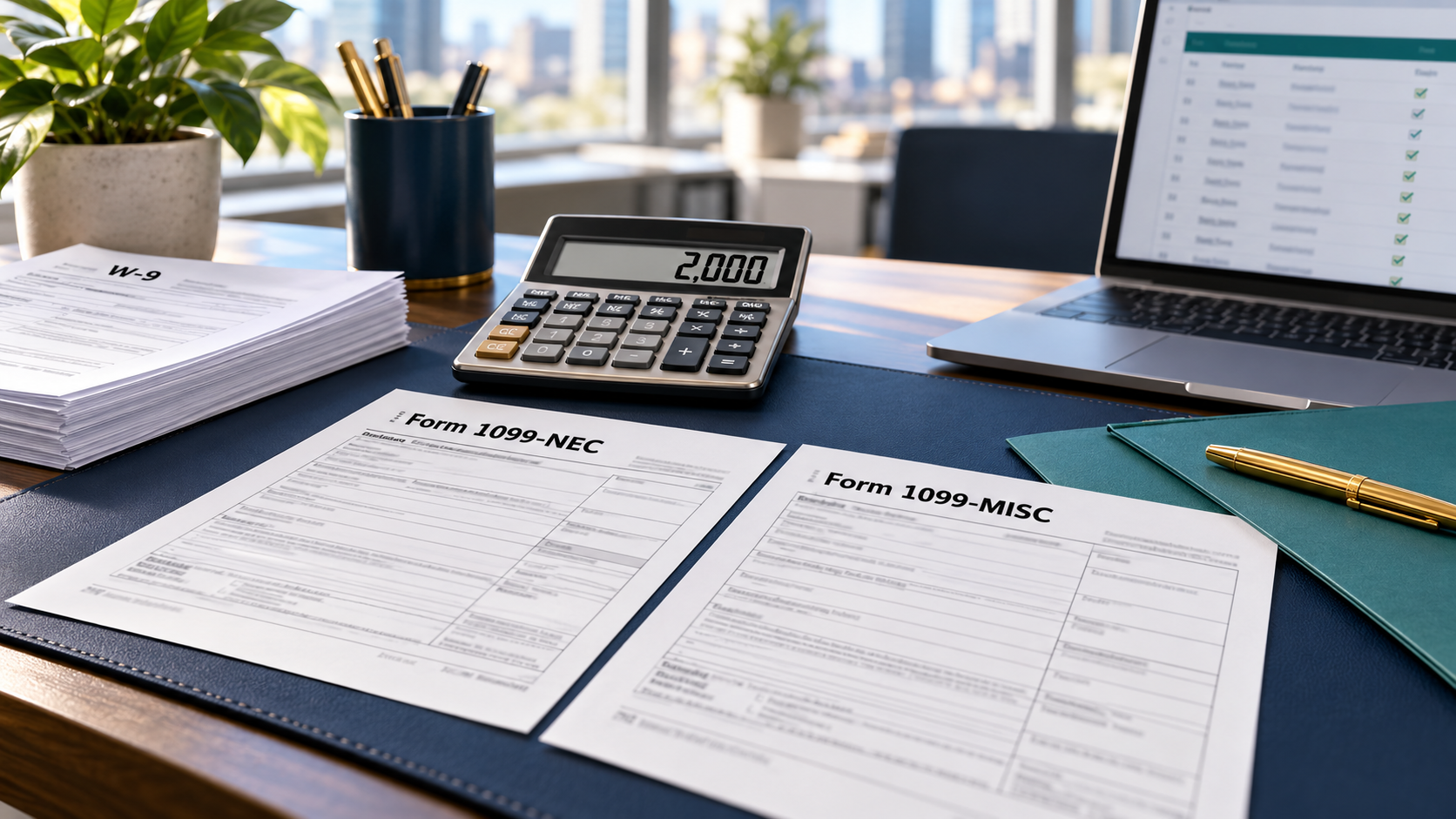
The IRS Business Tax Account gives eligible owners another way to keep federal tax information within reach.
Waiting for an IRS letter to find out something is wrong is not a tax management process. The good news is that the IRS has expanded its Business Tax Account (BTA), so eligible business users can check more of their federal tax information securely online.
For owners managing several companies, the practical benefit is visibility. Instead of waiting until a notice reaches the right person, you can build account reviews into the way your business already handles financial information. The important part is deciding who checks, what they compare and who follows up when something needs attention.
The IRS announced expanded access and features during 2026, including support for partnerships and other organization types. Depending on the entity type and the user’s authorized role, users may be able to view balances, payment history, selected digital notices, eligible transcripts and business information. Some users can also make or schedule payments, request tax compliance checks, download EIN verification notices or give access to eligible employees. Internal Revenue Service
The IRS Business Tax Account does not look the same for every user. Before assuming a feature is available, check the current requirements on the official IRS Business Tax Account page. An owner with limited access may see different information from a designated official with broader access.
That distinction matters when assigning responsibilities. The person who handles bookkeeping may not qualify for the same access as an owner or authorized company official. Confirm the appropriate role before building a process around a feature your team cannot yet use. Internal Revenue Service
When one person owns several entities, records get scattered. It becomes hard to tell which company received a notice, or whether a federal tax payment actually posted. For a restaurant or a construction company, an unresolved payroll tax notice can turn into a disruption that never needed to happen. Online access makes routine checks faster. It doesn’t replace bookkeeping, tax reconciliation or professional representation.
Consider a hypothetical owner with three restaurant entities. One company has a payment confirmation, another has a notice and the third has a question about a balance. Those are three separate follow-up items, even when the same person owns all three businesses.
Reviewing the IRS Business Tax Account alongside an entity list helps keep those items separate. Match each document to the correct legal name, tax period and company records before deciding what needs to happen next.
The benefit is not simply downloading more documents. It is giving the right person enough information to investigate an issue while the supporting records are available and the next step is clear.
BTA is not a universal portal for every taxpayer or every tax issue. Access and available functions depend on business structure, eligibility, the user’s identity and their role. Digital notices are not necessarily a complete substitute for paper correspondence. And having an account does not resolve a notice, correct a filing or authorize an outside accountant to act on the company’s behalf.
Treat the IRS Business Tax Account as another source of information to review, rather than proof that every obligation has been handled. If a notice appears, read the instructions and share the full document with your adviser. If a payment looks unfamiliar, gather the confirmation and accounting entry before drawing a conclusion.
Keep paper correspondence in the same review process. A letter sitting on someone’s desk and a digital notice downloaded by another employee should not become two disconnected conversations about the same issue.
Start with a short list of entities and the person responsible for checking each one. Include who receives paper mail, who maintains payment confirmations and who communicates with your tax adviser. This helps prevent everyone from assuming someone else has already followed up.
Choose a review schedule that fits your operations, with additional checks when a notice arrives or a payment question comes up. Record the review date, what was checked and any items that remain open. Logging in without recording the outcome makes the next review harder.
For each question found in the IRS Business Tax Account, keep the relevant notice, payment confirmation and internal notes together in a secure location. Use consistent filenames that identify the entity, tax period and document type so your team can find them again.
For example, a payment question should include the amount, payment date, intended tax period and available confirmation details. Your adviser can then review the question with the supporting information instead of requesting documents one at a time.
Give each unresolved item an owner and a next review date. Note whether you are waiting for an internal document, an adviser response or further information from the IRS. Keep it open until the follow-up is documented, rather than closing it because someone sent an email.
This is where the IRS Business Tax Account becomes useful beyond the initial setup. A consistent review process connects online information with the people responsible for acting on it.
We help businesses reconcile their financial information, keep notices organized and respond on time. When an IRS issue needs formal action, our tax team evaluates the right next steps and whether representation is needed.
Our tax planning and preparation services support that broader conversation. For owners with several entities, an IRS Business Tax Account review is most useful when it connects with accurate records and a clear understanding of which company needs attention.
You do not need another account that nobody checks. You need a practical way to use the information, share it securely and keep unresolved questions moving toward an answer.
Have multiple entities or an IRS notice that’s still open? Contact NeatBooks and we’ll review your tax account visibility and next steps with you.

Privacy Policy | Terms and Conditions | Powered by Purity
At NeatBooks, we know you want to focus on growing your business without the stress of messy books, missed deadlines, or worrying if you’re leaving money on the table. The problem is, financial complexity and unreliable support from previous accountants can leave you feeling stuck, overwhelmed, and vulnerable to costly mistakes.
It doesn’t have to be this way! Every entrepreneur deserves a financial partner who simplifies the chaos, provides proactive guidance, and empowers them to make confident decisions.
With over 300 businesses transformed and a team that speaks your language (no jargon, just straight talk), NeatBooks combines expert financial strategies with a personal touch. We’re here to turn complexity into clarity and help you ProsperNeatly™.
Here’s how we do it:
Step 1: Schedule a Discovery Call - Let’s understand if we are a good fit, first. Then, we’ll move
into an assessment of where you are and what actions we need to take together to help you gain
clarity and financial organization.
Step 2: Strategize & Optimize - Together, we build a plan customized for your business and
your goals, and we execute.
Step 3: ProsperNeatly™ - You gain the confidence that comes with having a reliable, competent
partner managing the financial side of your business.
Let’s get started by scheduling a Discovery Call today. In 15 minutes, you’ll know how we can impact your business.
In the meantime, we invite you to download any of our free resources that have been built to support entrepreneurs in the food service, construction, and real estate development and investment spaces